How Luxury Brands Benefit from Artistic Collaborations
In this landscape, artistic collaborations have become a strategic way for luxury brands to reinvent their identity.
- Type
- Master thesis — academic research
- Institution
- ESCP Business School
- Programme
- Master of Business Administration (MBA)Luxury Brand Management and Entrepreneurship2024–2025
- Document
- 19‑page PDF · 10.1 MB
01Context
The luxury industry stands at a crossroads balancing heritage and innovation, exclusivity and accessibility.
As Millennials and Gen Z become the dominant consumers, they seek brands that are culturally relevant, creative, and emotionally engaging.
These partnerships between brands and artists from fields such as painting, architecture, and digital art allow brands to express creativity, refresh their storytelling, and connect with new audiences.
Introduction — thesis, p. 3
- 01Artistic collaborations are everywhere — but poorly analyzed academically
- 02Absence of clear KPIs to evaluate cultural and commercial impact.
- 03Very Few studies link artification theory with managerial tools
02Literature
- 01
Luxury Brand Management (Kapferer, Okonkwo)
Luxury brands rely on heritage, storytelling, and symbolic value but must innovate to remain relevant — a “luxury paradox.”
- 02
Cultural Capital (Bourdieu, 1984)
Artistic collaborations enhance a brand’s prestige and legitimacy by transferring the symbolic value of art.
- 03
Digital Transformation
New media — NFTs, AI, metaverse — expand how brands express creativity and reach Gen Z audiences.
03Framework
“This study offers both academic contribution (a structured typology) and managerial guidance (a decision framework for collaboration formats).”
Each case was assessed through a common framework of objectives, tools, KPIs, scope, and format to identify emerging typologies and strategic patterns.
Conclusion — thesis, p. 9 · case assessment, p. 8
Objectives
- 01Audience Extension→ attract new consumers
- 02Exclusivity & Legitimacy→ reinforce heritage & prestige
- 03Innovation→ explore technology & creativity
Formats
- Physical
- Hybrid
- Digital
04Case set
- 01Dior × Kenny Scharf2021
- 02Louis Vuitton × Yayoi Kusama2012 & 2023
- 03Bulgari × Refik Anadol2021
- 04Gucci × Harry Styles2019–2022
- 05Hermès × Daniel Buren2010s
- 06Balenciaga × Fortnite2021
- 07Cartier × Fondation Cartier1984–present
05Findings
“Artistic collaborations are not superficial marketing tools — they are strategic mechanisms that merge creativity, culture, and commerce.”
- Stay culturally and socially relevant.
- Reaffirm authenticity through artistic association.
- Expand audiences without diluting exclusivity.
- Bridge tradition and innovation via hybrid experiences.
Conclusion — thesis, p. 9
06Recommendations
Future collaborations proposed in the thesis — ideas for brands to consider, not existing partnerships.
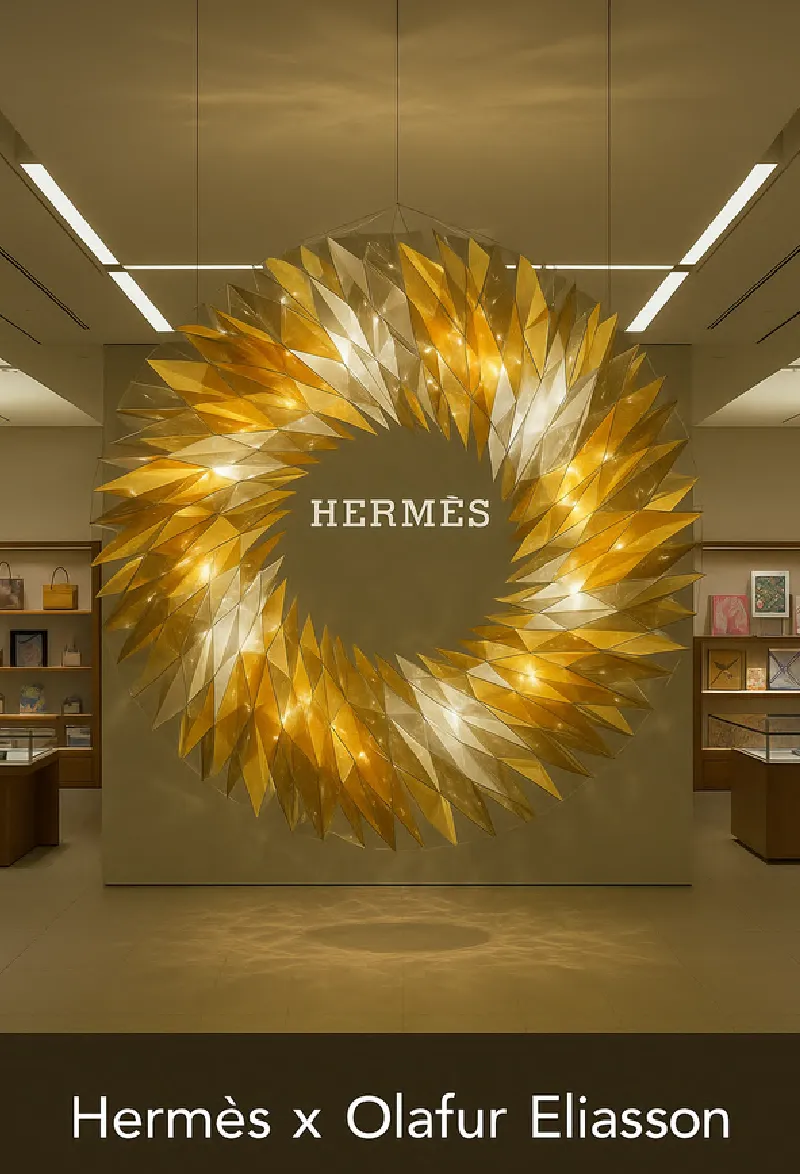 Type: Proposed collaboration
Hermès × Olafur Eliasson
An immersive exhibition using Eliasson’s solar-light installations, paired with limited Hermès silk scarves inspired by color/light experiments.
- Why
- Hermès values craftsmanship and nature; Eliasson is known for environmental art. Together they reinforce exclusivity while signaling sustainability.
- Intended effect
- Strengthens Hermès’ image as a house of timeless craft and ecological responsibility; builds cultural capital through museum partnerships.
Proposed in the thesis, p. 11
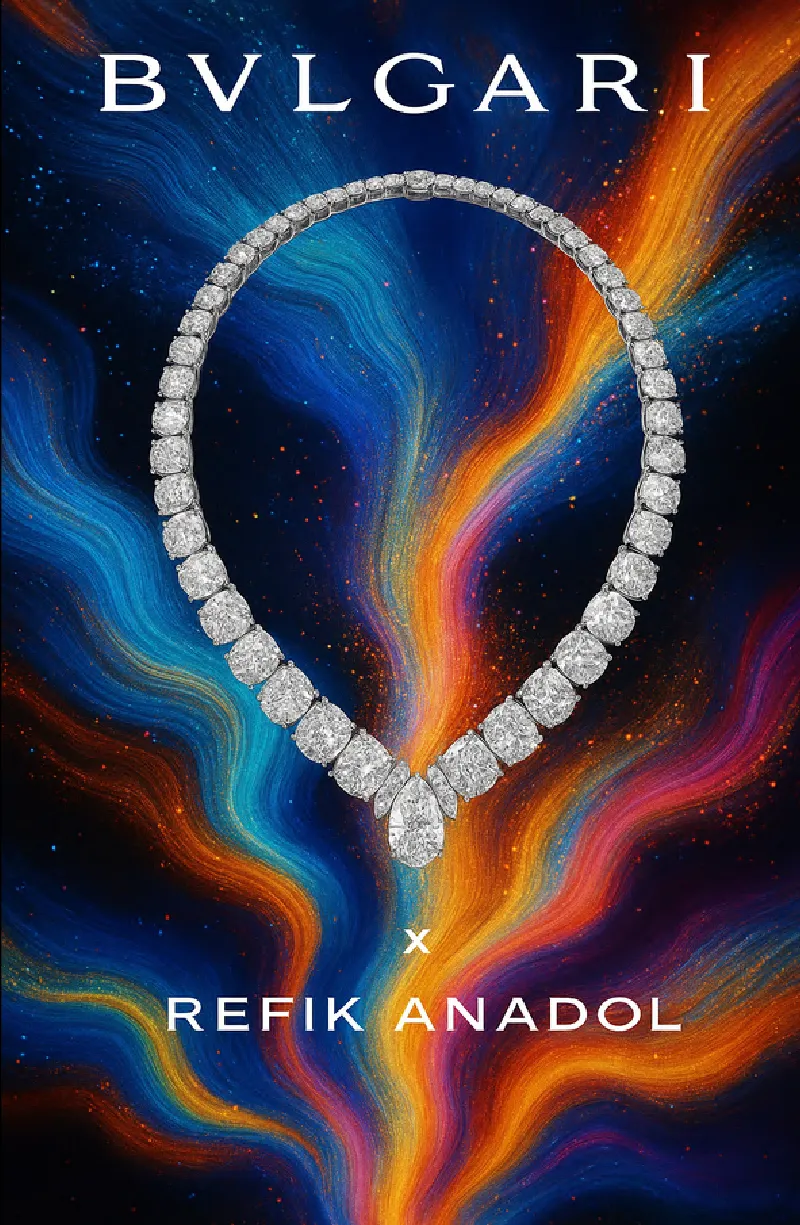 Type: Proposed collaboration
Bulgari × Refik Anadol
AI-designed Serpenti jewelry as NFTs linked to limited physical pieces. Digital exhibitions in Milan and Tokyo.
- Why
- Bulgari already collaborated with Anadol; extending it to blockchain/AI strengthens innovation leadership.
- Intended effect
- Positions Bulgari as a pioneer in digital luxury; creates scarcity through NFT-linked exclusivity; appeals to tech-savvy audiences.
Proposed in the thesis, p. 16
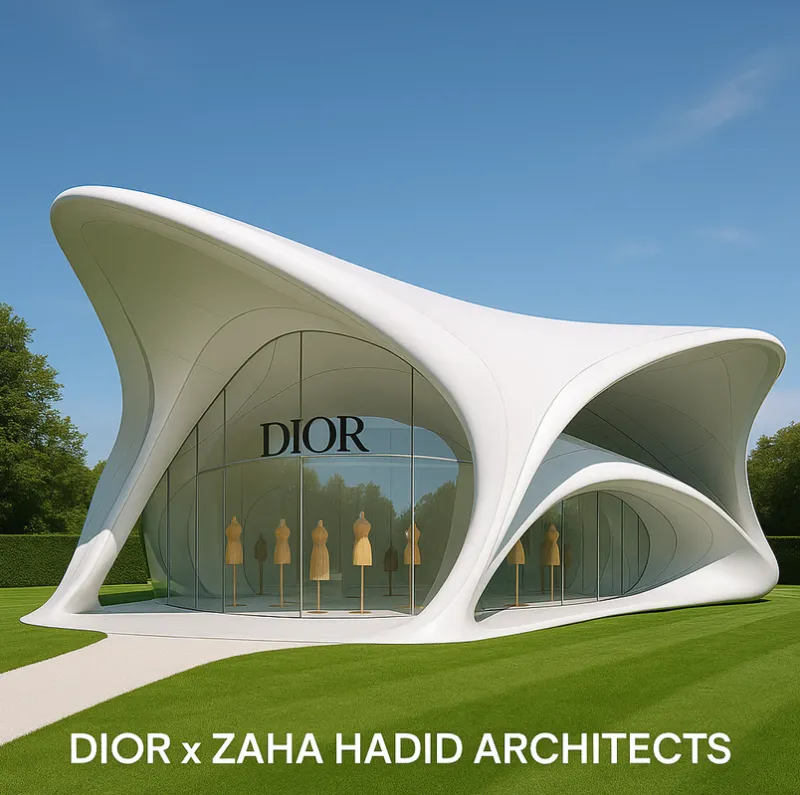 Type: Proposed collaboration
Dior × Zaha Hadid Architects
Runway shows staged in Hadid-inspired structures, with couture collections echoing her curvilinear forms.
- Why
- Dior’s elegance meets Hadid’s futuristic architecture, reinforcing artistry beyond fashion.
- Intended effect
- Creates a spectacle that merges fashion, design, and architecture; elevates Dior’s brand equity through cultural innovation.
Proposed in the thesis, p. 18
07The thesis
Master Thesis
Preview this 19-page document here (10.1 MB file; pages load as you scroll).